
Petrol Station Operating Models in Kenya. Who Owns the Pump, the Licence and the Fuel
2 November 2026
Behind every branded canopy there are at least 3 legal relationships. The law answers 3 questions about them. Who holds the land and the licence? Who owns the equipment and the fuel? What happens when the relationship ends? This edition answers each of them from the law and the decided cases.
| KEY POINTS AT A GLANCE Kenyan petrol stations run under 3 basic models. In a company owned, company operated station (COCO) the oil marketing company owns and runs the site. In a company owned, dealer operated station (CODO) the company owns the site and an independent dealer runs it. In a dealer owned, dealer operated station (DODO) the dealer owns and runs the site and buys fuel from the company whose brand it carries. No statute defines these models. They are creatures of contract, and the label the parties use does not decide their legal effect. The courts look at what the documents and the conduct of the parties actually show. The Petroleum Act and the Petroleum (Retail Dispensing Site Construction and Licensing) (No 2) Regulations 2025 require a retail licence from the Energy and Petroleum Regulatory Authority. The published requirements ask for a title deed or a registered lease in the name of the applicant, which in practice ties the licence to whoever holds the land. Ownership of the fuel turns on the Sale of Goods Act. Unless the contract says otherwise, property in fuel sold to a dealer passes when the parties intend, and risk passes with property. Many disputes about short deliveries, contamination and price changes are, at bottom, disputes about when the dealer became the owner. In 2025 the Authority found that some major oil marketing companies were imposing unapproved charges on CODO dealers and restricting the lubricants they could stock. It directed that dealership and franchise agreements be submitted for review before they take effect. Every dispute about a branded station turns on 3 questions. Who holds the land and the licence? Who owns the equipment and the fuel? What does the contract allow each side to do when the relationship ends? |
I. Introduction
A motorist who stops at a branded petrol station sees a single name on the canopy. Behind that name there are usually at least 3 legal relationships. There is the relationship between the owner of the land and the person who built the station. There is the relationship between the oil marketing company that supplies the fuel and the person who sells it at the pump. And there is the relationship between the licensee and the Energy and Petroleum Regulatory Authority, which licenses the site and polices what is sold there.
These relationships are often documented poorly, and sometimes not at all. In a case decided in October 2025 the formal marketing licence between a dealer and an oil company had been drafted but never signed, and the High Court had to decide what the parties had agreed from an offer letter and 2 years of conduct.1 In another, a dealer had operated a company owned station for about 30 years under an arrangement whose nature was still in dispute when the matter reached the Court of Appeal.2
This edition of The BOLD is the first in the Downstream Petroleum Series. It explains the operating models of petrol stations in Kenya from the ground up, and it answers a practical question that sits beneath most dealer disputes. Who owns the land, the licence, the equipment and the fuel? It describes the models, sets out the statutory framework, examines the decided cases and the recent regulatory findings, and closes with practical guidance. It takes no position on any matter pending before a court or the Authority.
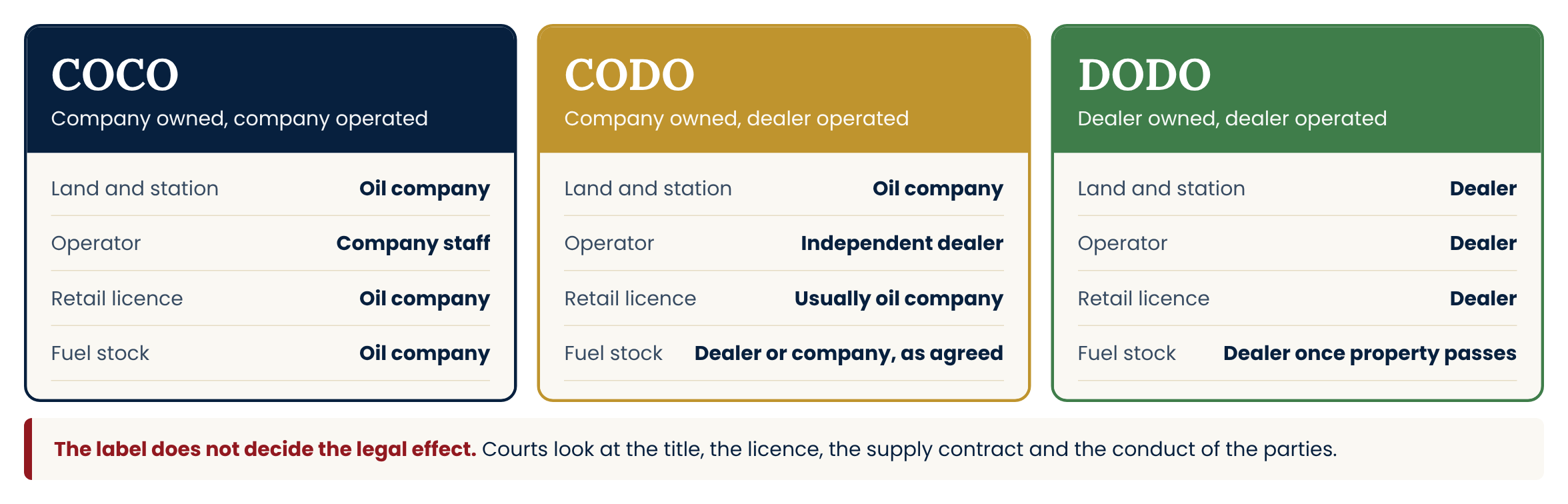
Figure 1. The 3 operating models of a branded petrol station
II. Foundational concepts
2.1 Oil marketing companies and dealers
An oil marketing company is a licensed company that imports, stores, distributes and sells petroleum products. The Authority licensed 6 new oil marketing companies in the year ending June 2025, bringing the total to 146.3 Most of them sell at wholesale, and a smaller number also run a retail network under their own brand.
A dealer is the person who runs the station day to day. The dealer employs the forecourt staff, banks the takings, manages stock and deals with customers. In industry usage the word covers both a person who operates a company owned station and a person who owns a station and buys fuel from a single company. The law does not use the word in a fixed sense, so the documents in each case must be read to see what the dealer actually is.
A station that carries no brand of an oil marketing company is usually called an independent. Independents buy fuel from any licensed wholesaler. In April 2026 the Authority stated that some oil marketing companies were holding back sales to non franchised retailers, which it described as independents, in anticipation of a price increase.4
2.2 Operating models
The Competition Authority of Kenya has identified 3 types of petrol station in the Kenyan market.5 The labels are now used throughout the industry.
The first is the company owned, company operated station, or COCO. The oil marketing company owns or leases the land, builds the station, holds the licence and employs the staff. There is no dealer in the legal sense. The company may engage a manager or a service contractor, but that person works for the company and does not trade on its own account.
The second is the company owned, dealer operated station, or CODO. The oil company owns the land and the station and supplies fuel to an independent dealer, who runs the station. The parties then share revenue in an agreed ratio, or the dealer pays the company a fee and keeps the margin.6 In its 2020 decision on the acquisition of Gulf Energy, the Competition Authority noted that under these arrangements the oil company prohibits the dealer from stocking competitor products.7
The third is the dealer owned, dealer operated station, or DODO. The dealer owns or leases the land and the station, and contracts with an oil marketing company for supply and the right to use its brand. In an appeal decided in 2010 the land on which the station stood belonged to the dealer, and the parties had signed a licence agreement that entitled the dealer to use the name of the oil company to sell its fuels.8
2.3 Labels and substance
The labels describe commercial practice. They are not legal categories, and no statute defines them. The Petroleum Act speaks only of retail, licences and licensees, and the 2025 retail regulations define a retail licence simply as a licence to operate a retail dispensing site.9 It follows that a court asked to decide the rights of the parties will not stop at the label. It will look at who holds the land, who holds the licence, who pays whom and for what, and who bears the risk of loss.
The point matters most where the parties disagree about the nature of their relationship. A dealer who has invested in a company owned site may argue that it is a tenant, or even a partner. A company may argue that the dealer is a mere licensee whose permission may be withdrawn on short notice. In Kileleshwa, Shell contended that the operator was a licensee whose licence was terminable at short or no notice, and the operator claimed that the relationship was akin to a partnership because it had made improvements valued at KSh 13,088,000.10 The second edition in this series examines that question in detail.
III. Legal framework
3.1 Petroleum Act
The Petroleum Act defines retail to include selling or offering to sell petroleum to a consumer, and acting as an agent or broker for a retailer or a consumer.11 Section 74 requires a licence for petroleum business. The listed activities, which include importation, bulk storage and bulk sales for retail, need a licence from the Authority, and the section also brings retail dispensing stations within the licensing powers of the county government.12 Operating without the required licence is an offence that carries a minimum fine of KSh 10,000,000, imprisonment for at least 3 years, or both.13
A licence is personal to its holder. A licensee may not transfer or give up its rights or obligations without the consent of the licensing authority, and consent may be withheld only if the transfer is likely to prejudice the public interest.14 The Authority may suspend or revoke a licence if the licensee is not operating within the terms of its licence or the Act, after giving 14 days to show cause and deciding within 30 days after that.15 A person aggrieved by the refusal, revocation or conditions of a licence may appeal to the Energy and Petroleum Tribunal within 30 days.16
3.2 Retail regulations of 2025
The rules for retail stations are now in the Petroleum (Retail Dispensing Site Construction and Licensing) (No 2) Regulations 2025. They were published and came into force on 14 November 2025 and revoked the earlier regulations of May 2025, while preserving existing licences and permits.17
The regulations apply at 2 stages. At the construction stage, a person needs a construction permit, and where the title to the land is not in the name of the developer, the developer must produce a registered lease of at least 5 years.18 A new site may not be built within 2 kilometres of an existing or proposed site on a class A road, or within 0.5 kilometres on other roads.19 At the trading stage, no person may retail petroleum products without a valid licence issued by the Authority.20 The applicant must prove ownership of the land by a title deed or a registered long term lease.21 The published checklist of the Authority puts the point directly. It asks for a title deed or a registered lease in the name of the applicant, and states that the licence is valid for 1 year and that no fee is charged.22
The regulations then impose duties on the licensee. It must buy only from the holder of a valid petroleum business licence, sell only products that meet the applicable standard, avoid selling adulterated or export products, keep its pumps calibrated, not sell above the maximum price or under dispense, not hoard, and obtain the consent of the Authority before it transfers any of its rights or obligations.23 A change of ownership cannot be dealt with by amending the licence. It must go through the transfer procedure.24
3.3 Sale of Goods Act
Fuel is goods, and a sale of fuel to a dealer is governed by the Sale of Goods Act unless the contract validly provides otherwise. Property in specific or ascertained goods passes when the parties intend it to pass, and the Act supplies rules for finding that intention.25 A seller may reserve the right of disposal until conditions such as payment are met.26 Unless otherwise agreed, risk passes with property.27 Fuel delivered by truck into a common underground tank is also usually unascertained until it is discharged, and no property passes in unascertained goods until they are ascertained.28
3.4 Land law
The land on which a station stands is held under a title or a lease. Leases are registrable under the Land Registration Act, and the retail regulations insist on a registered lease because only registration gives the lessee an interest that binds third parties.29 A dealer who is allowed onto company land without a lease holds, at most, a licence or a tenancy whose nature depends on the substance of the arrangement. English authority, which Kenyan courts have applied, treats exclusive possession for a term at a rent as the hallmark of a tenancy, and has held that a short arrangement to run a filling station was a licence on its true construction.30
3.5 Competition law
The Competition Act prohibits agreements that prevent, distort or lessen competition, including vertical agreements between suppliers and resellers.31 In an investigation reported in its annual report, the Competition Authority ordered Total Kenya to remove a clause in its dealership agreements that barred dealers from operating a competing outlet within 20 kilometres.32 The fourth edition in this series deals with exclusivity in detail.
Table 1. Who usually holds what under each model
| Item | COCO | CODO | DODO |
|---|---|---|---|
| Land and buildings | Oil company, as owner or lessee | Oil company, as owner or lessee | Dealer, as owner or lessee |
| Tanks, pumps and canopy | Oil company | Oil company, with the dealer often responsible for routine care | Dealer, or the oil company under a loan or equipment agreement |
| Retail licence | Oil company | Usually the oil company, since the licence follows the land | Dealer |
| Fuel in the tanks | Oil company | The dealer once property passes under the supply contract, unless stock is held on consignment | Dealer once property passes |
| Brand and trade marks | Oil company | Licensed to the dealer for the term | Licensed to the dealer for the term |
| Main risk of a dispute | Low, since there is no dealer | Termination, charges, rent, transit losses and exclusivity | Supply, pricing, debranding and exclusivity |
IV. Who owns what
4.1 Retail licence
The retail licence sits at the centre of the legal structure, because the person who holds it is the person the Authority will hold to account. The regulations place the duties in regulation 15 on the licensee, and the offences of selling above the maximum price and under dispensing are framed by reference to the owner of a retail site.33
Under a COCO the answer is simple. The company holds the land, the licence and the stock. Under a DODO the dealer holds the land and should hold the licence. Under a CODO the position is less tidy. Because the published requirements ask for a title deed or a registered lease in the name of the applicant, the licence will in practice be held by the oil company unless the dealer holds a registered sublease.34 The result is that the person who takes the operational decisions at the pump may not be the person who answers to the regulator for them. That gap is a reason why CODO agreements usually contain wide indemnities from the dealer and wide rights of inspection for the company.
4.2 Land and buildings
The owner of the land owns the buildings and anything fixed to the land, unless an agreement or a statute provides otherwise. A dealer who builds on company land, or pays for improvements to a company station, may therefore find that the improvements belong to the company. Whether it can recover their cost depends on the contract and on equitable principles such as unjust enrichment. In Kileleshwa the operator sought compensation of KSh 13,088,000 for improvements to a station that it had run since about 1971. In a ruling on an interlocutory application, the Court of Appeal observed that the operator was a licensee and was willing to vacate if adequately compensated.35
4.3 Equipment
Tanks, pumps, canopies and payment terminals are expensive, and the contract should say who owns them. In Njane the dealer was granted the right to use the equipment, trade name, trade marks and goodwill of the oil company, and paid a maintenance fee of KSh 0.23 per litre.36 The High Court held that the payment of that fee gave rise to an obligation on the company to maintain the equipment, and that the company, having mandated a particular point of sale system and retained control over it, owed an implied duty to keep it reasonably secure.37 The lesson is that ownership of equipment carries obligations as well as rights. A company that owns and controls the equipment cannot easily blame the dealer for its failure.
4.4 Fuel in storage tanks
Whether the dealer owns the fuel is a question of contract read against the Sale of Goods Act. Under most dealer agreements the dealer buys the fuel and pays for it in advance, by bank guarantee or on credit. Property then passes when the parties intend, which will usually be on discharge into the tanks of the dealer or on payment, whichever the contract specifies.38 Some arrangements instead keep the fuel as the property of the company until it is sold to the motorist. In that case the dealer is an agent who sells on behalf of the company and earns a commission, and the fuel in the tanks remains company stock.
The distinction has real consequences. If the dealer owns the fuel, it bears the risk of loss once property passes, unless the contract allocates risk differently.39 It also bears the gain or loss when the maximum price changes between purchase and sale, which is examined in the fifth edition in this series. If the company owns the fuel, it bears those risks, and the dealer has an obligation to account rather than a debt to pay. In Njane the dealer recovered KSh 2,302,575.47 for short landing, being deliveries below the quantities on the delivery notes that were billed in full.40 The Authority also found in 2025 that some oil companies were not compensating CODO dealers for fuel lost in transit between the depot and the station.41 Both findings reflect the same underlying question. Who owned the fuel when it went missing?
4.5 Brand and goodwill
The brand belongs to the oil marketing company, which grants the dealer a licence to use its marks for the term of the agreement. When the agreement ends, the licence ends, and the dealer must stop using the marks. The goodwill of the site is more contested. The company will say that motorists come for the brand, and the dealer will say that they come for the service. The sixth edition in this series examines goodwill on exit.
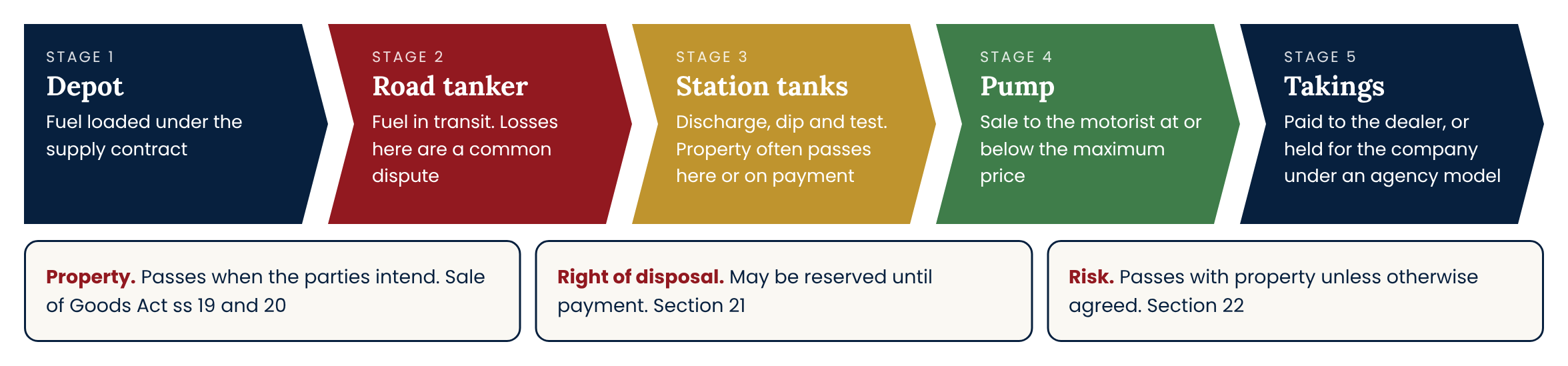
Figure 2. Where property and risk in the fuel usually pass
V. Disputes and decided cases
5.1 Esso Kenya Ltd v Okiya
In Esso v Okiya the oil company owned a petrol station in Kakamega and granted the dealer an exclusive licence to sell its products there and for that purpose only. The agreement ran for 6 months at a time, could be ended on 6 months notice, and required the dealer to pay a monthly operator fee and a fee per litre and to buy only from Esso.42 After fuel at the station was found to be contaminated with kerosene, Esso terminated with immediate effect and disabled the pumps. The High Court granted an injunction. The Court of Appeal set it aside. It held that even if the termination breached the notice clause, damages were an adequate remedy, and that the judge should have given weight to the evidence on public safety.43 The case is an early example of a CODO and shows the weakness of the position of a dealer whose only interest is contractual.
5.2 Agip (Kenya) Ltd v Appollos
In Agip v Appollos the oil company owned a station in Nakuru. By an agreement of 1 November 1991 it granted the dealer the right and licence to run and operate the station and to sell, advertise and display its products. Either party could terminate on 30 days written notice, and the company charged the dealer 4 cents for every litre of petrol, gas oil and kerosene sold to it.44 The structure is a classic CODO. The company owned the land, granted a licence to operate, sold the fuel to the dealer and earned a fee on throughput.
5.3 Kobil Petroleum Ltd v Wabidonge
In Kobil v Wabidonge the land belonged to the dealer. The parties signed a licence agreement on 15 February 1995 that allowed the dealer to use the name of the oil company to sell its fuels.45 This is a DODO. The company had no interest in the land and its rights were confined to supply and brand.
5.4 Njane v Total Kenya Ltd
Njane is the most detailed recent judgment on a branded station. Under an offer letter of 31 July 2007 the dealer was appointed to operate a company station in Hurlingham, Nairobi, as a licensee. It had to keep a working capital of KSh 12,500,000, provide a bank guarantee of KSh 3,500,000, pay a royalty of KSh 950,000 a month in advance, pay a maintenance fee per litre, buy exclusively from the company and maintain minimum monthly stocks of 350,000 litres.46 A formal marketing licence was drafted but never signed.
The High Court, Mabeya J, held that a binding contract existed. The parties had acted on the offer letter for about 2 years, and the failure to sign the formal licence did not negate the terms of the earlier letter.47 It found that the company had breached its obligation to supply, its obligation to maintain the equipment and its implied duty to keep the mandated point of sale system secure, and it entered judgment for KSh 139,279,574.97 with interest and costs.48 It held that cutting pump prices without notice was not a breach of contract, because the offer letter had no express notice term, although it described the conduct as inconsistent with good faith and fair trading.49 The third edition in this series examines the implied terms in more depth.
5.5 Regulatory findings of 2025
In a letter of 17 April 2025 to Vivo Energy, Rubis Energy Kenya, TotalEnergies Marketing Kenya, Ola Energy Kenya, BE Energy and Trinity Energy, the Authority reported findings from an inquiry into CODO stations.50 The Competition Authority had directed it to investigate at least 40 CODO stations across 18 counties after dealers complained.51 The Authority identified margin squeezing through additional unapproved charges, overcharging of rent, restrictive agreements that limited the right of dealers to stock alternative lubricants and ancillary brands, and a failure to compensate dealers for transit losses.52 It directed that dealership, commercial and franchise agreements be submitted to it with applications for licence renewal, for review before they become effective.53
VI. Open legal questions
6.1 Power to approve dealer agreements
The direction of April 2025 raises a question of power. Neither the Petroleum Act nor the 2025 retail regulations contains an express provision requiring dealer agreements to be submitted or approved.54 The Authority may rely on its power to attach conditions to licences, its general mandate to regulate the downstream sector, and its role in setting the margins that make up the maximum price.55 An oil company may answer that a power to review private contracts must be conferred clearly, and that the Competition Act already provides a route for exclusivity and pricing concerns. No court has yet decided the point.
6.2 Responsibility at the pump
Where the licence is held by the company but the station is run by the dealer, a breach of the price cap, a calibration failure or a sale of adulterated fuel may be committed by the dealer and charged against the licensee. The Act makes the owner of a retail site liable for under dispensing and overpricing, and makes the person in charge of a tanker carrying adulterated fuel liable for that offence.56 How far a company can be held responsible for the conduct of an independent dealer, and how far it can pass the consequences back under its contract, will depend on the facts and on the drafting. The seventh edition in this series examines that allocation.
6.3 Licence or tenancy?
The third question is whether a CODO dealer who is in exclusive occupation of a station and pays a monthly sum is a licensee or a tenant. If it is a tenant, the protections of Cap 301 may apply to a tenancy of a shop that is not in writing or is for 5 years or less.57 A licensee has no such protection. The second edition in this series examines the question in detail.
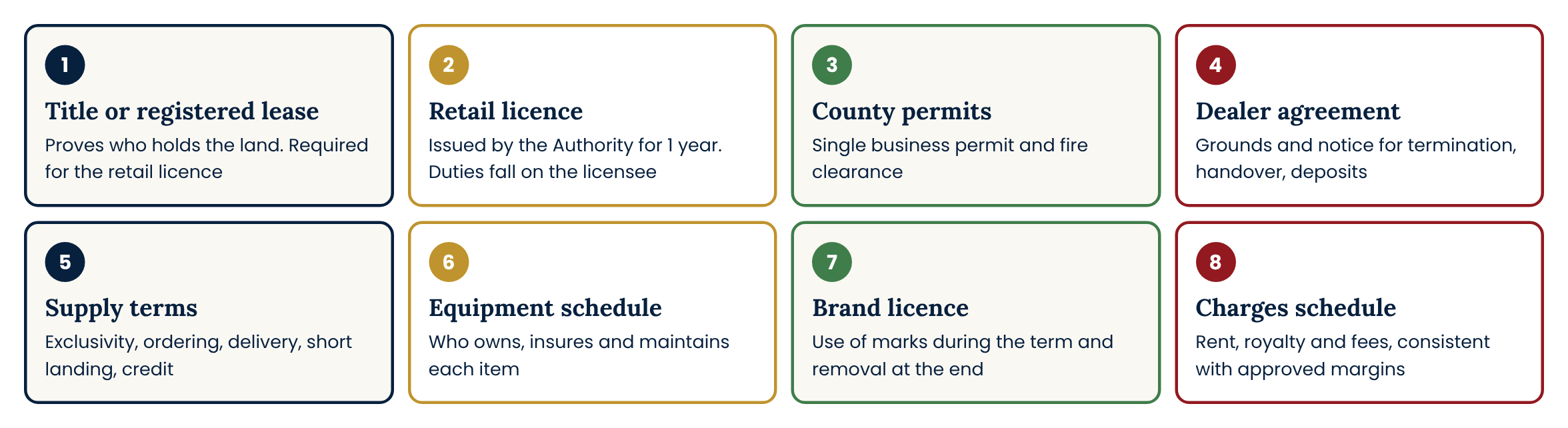
Figure 3. Documents that should exist for every branded station
VII. Questions every participant should answer
The 3 questions in the summary give a practical checklist for anyone entering, running or ending a branded station.
Who holds the land and the licence? The parties should identify the title or registered lease and the name on the retail licence, and should make sure that the person who holds the licence has the contractual control it needs to meet its obligations.58
Who owns the equipment and the fuel? The agreement should state who owns each item of equipment, who must maintain it, and when property and risk in each delivery pass. It should also say how short deliveries and transit losses are measured and credited.59
What happens when the relationship ends? The agreement should state the grounds and notice for termination, the handover of the station, the treatment of stock and deposits, and the removal of branding.60
7.1 Practical guidance for dealers
Dealers should insist on a signed agreement that matches the offer they accepted, keep records of every delivery and dip reading, and test deliveries before discharge where possible. They should ask who will hold the licence and should obtain a copy. A dealer who invests in improvements to company property should agree in writing how that investment will be treated if the relationship ends.
7.2 Practical guidance for oil marketing companies
Companies should document each model accurately rather than using a single template across all sites. They should keep the charges in their agreements consistent with the margins approved by the Authority, avoid restrictions on unrelated products that they cannot justify, and prepare for the review of agreements that the Authority has signalled.61 Where they hold the licence for a site run by a dealer, they should keep the rights of inspection and the controls they need to meet their own duties.
7.3 Practical guidance for landowners
A landowner who leases land to an oil company for a station should check whether the lease permits subletting or licensing to a dealer, and on what terms. The lease should deal with assignment on a change of control of the oil company and with the removal of tanks and the remediation of the site at the end of the term. The tenth edition in this series deals with assignment on a sale of the business.
VIII. Conclusion
The names on the canopy and in the contracts are a starting point and no more. COCO, CODO and DODO describe how the industry organises itself, but the rights of the parties depend on the title, the licence, the supply contract and what the parties have actually done. The decided cases show that courts will enforce what the parties agreed, will infer terms where an agreement is incomplete, and will hold an oil company to obligations that come with control. The regulator has also signalled that it will look behind the contracts at the charges and restrictions they contain. A dealer, an oil company or a landowner who can answer the 3 questions in this edition will be well placed for the disputes that follow.
Benson Odiwuor is an Advocate of the High Court of Kenya based in Nairobi, whose practice focuses on dispute resolution in the regulated industries, including mining, oil and gas, banking and project finance. He is the editor of The BOLD, Benson Odiwuor’s Legal Digests, a legal newsletter on dispute strategies and legal developments in the regulated industries of Kenya. Subscribe to The BOLD here.
For inquiries, contact the author at info@bensonodiwuor.com.
References
- Njane t/a Argwings Twin Service Station & another v Total Kenya Limited & another (Civil Case 433 of 2010) [2025] KEHC 14898 (KLR) paras 27 to 31 and 79 to 86 <https://new.kenyalaw.org/akn/ke/judgment/kehc/2025/14898/eng@2025-10-24>. ↩
- Kileleshwa Service Station Ltd v Kenya Shell Ltd (Civil Application Nai 84 of 2008) [2008] eKLR <https://www.judy.legal/case/kileleshwa-service-station-limited-v-kenya-shell-limited>. ↩
- ‘EPRA Registers Six New Oil Marketers’ Capital Business (Nairobi, 29 September 2025) <https://www.capitalfm.co.ke/business/2025/09/epra-registers-six-new-oil-marketers>. ↩
- ‘EPRA Warns Oil Firms over Fuel Hoarding’ The Star (Nairobi, 8 April 2026) <https://www.the-star.co.ke/news/2026-04-08-epra-warns-oil-firms-over-fuel-hoarding>. ↩
- Competition Authority of Kenya, ‘Decision on the Proposed Acquisition of Control of Gulf Energy Holdings Limited by KenolKobil Plc’ (2020) paras 50 and 51 <https://cak.go.ke/sites/default/files/determinations/2024-07/CAK%20Decision%20on%20Acquisition%20of%20Control%20of%20Gulf%20Energy%20Holdings%20Limited%20by%20KenolKobil%20Plc%20(1).pdf>. ↩
- ‘Oil Majors Overcharging Owners of Petrol Stations’ Daily Nation (Nairobi, 22 May 2025) <https://nation.africa/kenya/business/oil-majors-overcharging-owners-of-petrol-stations-5053362>. ↩
- CAK, KenolKobil and Gulf decision (n 5) para 51. ↩
- Kobil Petroleum Ltd v Patrick Olasa Wabidonge [2010] KECA 165 (KLR) <https://new.kenyalaw.org/akn/ke/judgment/keca/2010/165/eng@2010-07-09>. ↩
- Petroleum Act 2019 (No 2 of 2019), now Cap 308 of the Laws of Kenya s 2 <https://new.kenyalaw.org/akn/ke/act/2019/2>; Petroleum (Retail Dispensing Site Construction and Licensing) (No 2) Regulations 2025 (LN 188 of 2025) reg 2 <https://epra.go.ke/extras/legal/web/uploads/6a5f3964c4b13_The%20Petroleum%20(Retail%20Dispensing%20Site%20Construction%20and%20Licensing)(No%202)%20Regulations.pdf>. ↩
- Kileleshwa (2008) (n 2); Kileleshwa Service Station Ltd v Kenya Shell Ltd (Civil Appeals 205 and 239 of 2008) [2012] KECA 13 (KLR) <https://new.kenyalaw.org/akn/ke/judgment/keca/2012/13/eng@2012-04-20>. ↩
- Petroleum Act s 2. ↩
- Petroleum Act s 74(1) and (2). ↩
- Petroleum Act s 74(3). ↩
- Petroleum Act s 83(1) and (5). ↩
- Petroleum Act s 81. ↩
- Petroleum Act s 85. ↩
- Retail Regulations 2025 reg 24; Petroleum (Retail Dispensing Site Construction and Licensing) Regulations 2025 (LN 100 of 2025), revoked by LN 188 of 2025 <https://new.kenyalaw.org/akn/ke/act/ln/2025/100/eng@2025-05-30>. ↩
- Retail Regulations 2025 First Schedule, Part II. ↩
- Retail Regulations 2025 reg 7(4). ↩
- Retail Regulations 2025 reg 10(1). ↩
- Retail Regulations 2025 Third Schedule. ↩
- Energy and Petroleum Regulatory Authority, ‘Requirements for Licence for Retail of Petroleum Products (Except LPG)’ (February 2025) <https://epra.go.ke/sites/default/files/2025-02/Licence%20for%20Retail%20of%20Petroleum%20Products%20%28Except%20LPG%29.pdf>. ↩
- Retail Regulations 2025 reg 15(1). ↩
- Retail Regulations 2025 regs 14(2) and 17. ↩
- Sale of Goods Act (Cap 31) ss 19 and 20 <https://new.kenyalaw.org/akn/ke/act/1930/33/eng@1964-11-03>. ↩
- Sale of Goods Act s 21. ↩
- Sale of Goods Act s 22. ↩
- Sale of Goods Act s 18. ↩
- Land Registration Act 2012 (No 3 of 2012); Retail Regulations 2025 Third Schedule. ↩
- Street v Mountford [1985] AC 809 (HL); Shell-Mex and BP Ltd v Manchester Garages Ltd [1971] 1 WLR 612 (CA); Kileleshwa (2012) (n 10). ↩
- Competition Act 2010 (No 12 of 2010), now Cap 504 of the Laws of Kenya s 21. ↩
- ‘CAK Orders Total’s Anti-Competition Clauses Expunged’ Daily Nation (Nairobi) <https://nation.africa/kenya/business/cak-orders-total-s-anti-competition-clauses-expunged-138340>. ↩
- Retail Regulations 2025 reg 15(1); Petroleum Act s 99(1)(n). ↩
- EPRA, ‘Requirements for Licence for Retail’ (n 22). ↩
- Kileleshwa (2008) (n 2). ↩
- Njane (n 1) paras 3 and 7. ↩
- Njane (n 1) paras 110, 111 and 117 to 119. ↩
- Sale of Goods Act ss 19 to 21. ↩
- Sale of Goods Act s 22. ↩
- Njane (n 1) paras 56 and 96. ↩
- ‘Oil Majors Overcharging Petrol Station Owners’ Business Daily (Nairobi, 22 May 2025) <https://www.businessdailyafrica.com/bd/corporate/industry/oil-majors-overcharging-petrol-station-owners-5053294>. ↩
- Esso Kenya Ltd v Okiya (Civil Appeal 69 of 1991) [1992] KECA 53 (KLR) <https://new.kenyalaw.org/akn/ke/judgment/keca/1992/53/eng@1992-07-10>. ↩
- Esso v Okiya (n 42). ↩
- Agip (Kenya) Ltd v Appollos Kennedy Mwangi t/a Appollos Service Station (Civil Appeal 166 of 1995) [1996] eKLR <https://www.judy.legal/case/agip-kenya-limited-v-appollos-kennedy-mwangi-ta-appollos-service-station>. ↩
- Kobil v Wabidonge (n 8). ↩
- Njane (n 1) paras 2 to 5 and 33. ↩
- Njane (n 1) paras 79 to 86. ↩
- Njane (n 1) paras 92 to 96, 110, 111, 117 to 119 and 166; ‘How TotalEnergies’ Missteps Led to Sh139m Payout after Fuel Station Collapse’ Business Daily (Nairobi, October 2025) <https://www.businessdailyafrica.com/bd/corporate/companies/how-totalenergies-missteps-led-fuel-station-collapse-5249378>. ↩
- Njane (n 1) para 100. ↩
- ‘Oil Majors Overcharging Petrol Station Owners’ (n 41). ↩
- ‘Oil Majors Overcharging Owners of Petrol Stations’ (n 6). ↩
- ‘Oil Majors Overcharging Petrol Station Owners’ (n 41). ↩
- ‘Oil Majors Overcharging Petrol Station Owners’ (n 41). ↩
- Retail Regulations 2025 regs 10 to 17. ↩
- Petroleum Act ss 76 and 101. ↩
- Petroleum Act s 99(1)(n) and (p). ↩
- Landlord and Tenant (Shops, Hotels and Catering Establishments) Act (Cap 301) s 2. ↩
- Retail Regulations 2025 reg 15(1); EPRA, ‘Requirements for Licence for Retail’ (n 22). ↩
- Sale of Goods Act ss 19 to 22; Njane (n 1) paras 96, 110 and 111. ↩
- Matu v Rubis Energy Kenya Plc (Tribunal Appeal E003 of 2025) [2025] KEET 29 (KLR) <https://new.kenyalaw.org/akn/ke/judgment/keet/2025/29/eng@2025-06-26>; Esso v Okiya (n 42). ↩
- ‘Oil Majors Overcharging Petrol Station Owners’ (n 41). ↩