
Licence Suspensions at Kenyan Petrol Stations. Adulteration, Hoarding and Who Pays
2 November 2026
When the regulator closes a station, the licence holder bears the sanction but the cause may lie elsewhere. The law answers 3 questions about it. Was the regulatory action lawful? Who caused the breach? How does the contract allocate the loss? This edition answers each of them from the law and the decided cases.
| KEY POINTS AT A GLANCE The Energy and Petroleum Regulatory Authority tests fuel at retail stations across the country and closes sites that sell adulterated or export fuel. Between July and September 2025 it ran 6,090 tests at 1,315 sites and shut at least 10 stations. Its biannual report for 2025 and 2026 recorded 23 non compliant stations out of 2,305 sampled. The Petroleum Act allows the Authority to suspend or revoke a licence after giving 14 days to show cause and deciding within 30 days. Selling adulterated fuel, diverting export fuel, hoarding and selling above the maximum price are all offences with heavy minimum penalties. At a branded station the licence holder, the operator and the supplier may be different persons. A suspension falls on the licence holder, but the cause may lie with the dealer, the transporter or the supplier. The contract decides who bears the loss. Implied conditions of quality under the Sale of Goods Act protect a dealer that receives bad fuel from its supplier. Indemnities, testing on delivery and records of who handled the fuel decide most disputes. A licensee aggrieved by a suspension or revocation may appeal to the Energy and Petroleum Tribunal within 30 days, and the Tribunal may grant interim relief. A party may also go to the Tribunal where the Authority has not decided a complaint in time. Every enforcement dispute turns on 3 questions. Was the regulatory action lawful? Who caused the breach? How does the contract allocate the loss? |
I. Introduction
When the Authority finds adulterated fuel at a station, the consequences fall quickly. The station is closed, its name is published, and the licence may be suspended or revoked. The business loses its sales from that day. The brand on the canopy suffers too, and the oil company may face questions from the regulator about its supply chain.
Behind each closure lies a second question that the regulator does not answer. Who was responsible? The fuel may have been adulterated at the station by the dealer, in the tanker by the transporter, or at the depot before loading. Export fuel may have been diverted by any of them. The Authority acts against the site and the licence, but the losses must then be shared among the parties under their contracts and the general law.
This edition of The BOLD explains the enforcement powers of the Authority over retail stations, the offences that trigger them, the remedies available to a licensee, and the way losses are allocated between oil companies, dealers and transporters. It closes with practical guidance. It takes no position on any matter pending before a court, tribunal or the Authority.
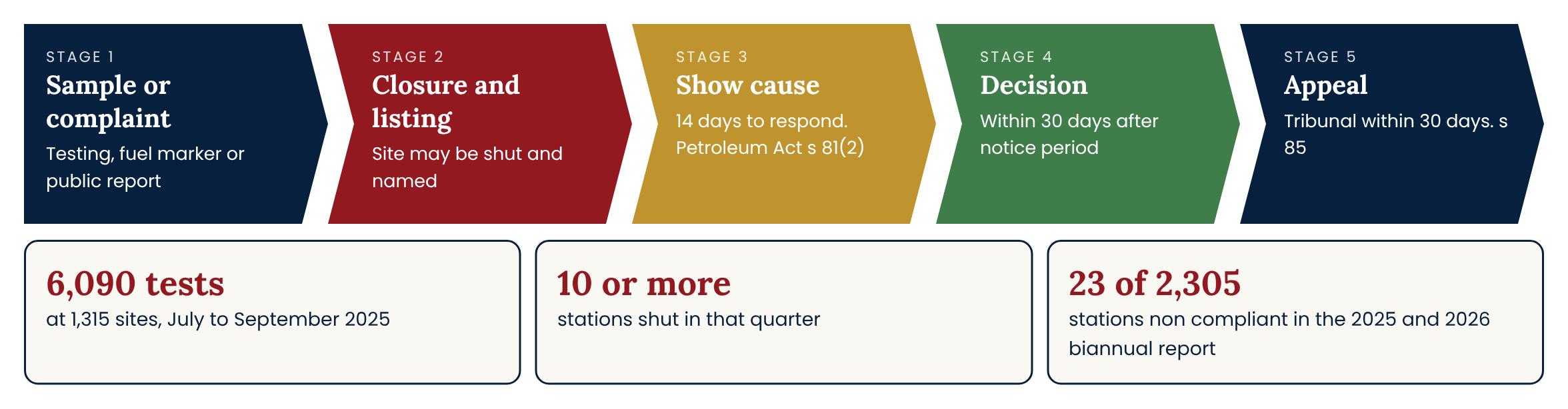
Figure 1. From a failed sample to a licence decision
II. Foundational concepts
2.1 Adulteration
Adulterated petroleum means mixed refined petroleum products that alter the specifications in the applicable Kenya Standard.1 The common forms are petrol or diesel mixed with kerosene, and diesel with high sulphur content. The Authority has reported stations selling super petrol adulterated with domestic kerosene, diesel adulterated with kerosene, and high sulphur diesel.2
2.2 Export dumping
Fuel that enters Kenya in transit to a neighbouring country is not subject to the same taxes as fuel for local use. Diverting it to the local market avoids those taxes and is prohibited.3 The Authority marks export fuel and kerosene so that it can detect diversion at retail. In its biannual report for 2025 and 2026 it recorded the marking of more than 2,270,000,000 litres of export fuel and 28,000,000 litres of locally consumed kerosene.4
2.3 Hoarding and overpricing
Hoarding is the withholding of stock, typically in anticipation of a price increase. Overpricing is selling above the maximum retail price set each month. In April 2026 the Authority warned oil marketing companies against hoarding and issued notices to show cause to petrol stations that had allegedly sold above the revised maximum prices.5
2.4 Safety breaches
The Authority also acts on safety. After the explosion at Embakasi in February 2024, which killed at least 7 people and injured more than 200, the Authority issued a notice to show cause to the firms concerned, alleging that they had been filling cylinders belonging to other companies, and then suspended a licence. The firms challenged the suspension in the High Court, contending that they had not been heard.6 The eighth edition in this series deals with liquefied petroleum gas.
III. Legal framework
3.1 Standards and quality offences
A person who sells, transports or stores petroleum for use in Kenya must meet the relevant Kenya Standard, and no person may divert to sell in Kenya goods destined for other markets.7 Selling or offering for sale petroleum that does not meet the standard, and storing, transporting or selling adulterated petroleum, are offences that carry a fine of not less than KSh 5,000,000, imprisonment of not less than 2 years, or both.8 The Petroleum (Products Quality Management) (No 2) Regulations 2025 add detailed rules on sampling, testing and marking.9
3.2 General offences
Section 99 lists further offences. They include hoarding by the owner or operator of a facility, under dispensing or selling above the maximum price by the owner of a retail site, and being in charge of or owning a tanker carrying adulterated petroleum or discharging export petroleum for local use.10 The penalties range from a fine of not less than KSh 1,000,000 or imprisonment of not less than 1 year, to a fine of not less than KSh 10,000,000 or imprisonment of not less than 5 years, depending on the offence.11
3.3 Suspension and revocation
The Authority may suspend or revoke a licence if the licensee is not operating within the terms of its licence or the Act. Unless the licence provides otherwise, it must give the licensee 14 days to show cause, and must decide within 30 days after the notice period ends. A suspension or revocation does not remove liability for penalties already incurred.12 The retail regulations repeat these rules for retail licences, allow the Authority to reinstate a licence once the reasons for suspension no longer exist, and allow it to publish the names of sites that may have committed offences.13
3.4 Duties of retail licensees
The retail licensee must sell only products that meet the standard, must not sell adulterated or export products, must not sell above the maximum price or under dispense, and must not hoard.14 These duties fall on the licensee, whoever operates the station day to day.
3.5 Appeals and complaints
A person aggrieved by a refusal, revocation or condition of a licence may appeal to the Energy and Petroleum Tribunal within 30 days of written notice of the decision.15 The Tribunal may grant remedies including injunctions.16 Where a complaint to the Authority has not been decided in time, a party may approach the Tribunal without waiting for a decision.17
3.6 Fair administrative action
Every decision of the Authority is administrative action and must be expeditious, efficient, lawful, reasonable and procedurally fair.18 A person whose rights are likely to be adversely affected must be given prior notice, an opportunity to be heard and reasons. A closure without notice may be justified in an emergency, but the Authority must still follow a fair procedure as soon as practicable. In 2024 a petition asked the High Court to restrain the Authority from unilaterally closing and sealing sites and to order the reopening of sites that had been closed.19
Table 1. Main enforcement grounds at retail stations
| Ground | Provision | Minimum penalty on conviction |
|---|---|---|
| Selling non standard or adulterated fuel | Petroleum Act s 92(2) | KSh 5,000,000 or 2 years, or both |
| Diverting export fuel to the local market | s 92(1) and s 99(1)(p) | As for the relevant offence |
| Hoarding | s 99(1)(k) | KSh 1,000,000 or 1 year, or both |
| Selling above the maximum price or under dispensing | s 99(1)(n) | KSh 10,000,000 or 5 years, or both |
| Owning a tanker carrying adulterated fuel | s 99(1)(q) | KSh 10,000,000 or 5 years, or both |
| Any breach of licence terms | s 81 | Suspension or revocation after notice |
IV. Enforcement in practice
4.1 Testing and closure
The Authority monitors fuel quality through continuous sampling at retail sites and through fuel marking.20 Between January and March 2025 it carried out 5,978 tests at 1,360 sites and closed several stations, including a station in Ahero that was found selling super petrol adulterated with domestic kerosene.21 Between July and September 2025 it carried out 6,090 tests at 1,315 sites, found 1,303 compliant and shut at least 10, at least 2 of which were repeat offenders.22 Between October and December 2025 it reported violations in several counties, including a station in Makueni that faced penalties of KSh 132,780 for selling export diesel, and the impounding of trucks carrying adulterated or export fuel.23
4.2 Price enforcement
In April 2026 the Authority issued notices to show cause to petrol stations under section 81(2), giving them 14 days to explain why their licences should not be suspended or revoked for selling above the revised maximum prices.24 In the same month it warned that some oil marketing companies were deliberately holding back sales to independent retailers in anticipation of a price increase, and described the practice as hoarding.25
4.3 Publication
The Authority publishes the names of stations found selling adulterated or export fuel, and invites the public to report suspected cases.26 Publication is lawful under the regulations, but it causes immediate commercial harm to the station and the brand. A station that is later cleared has no obvious statutory remedy for the harm caused by publication.
V. Causation of breaches
5.1 The chain of custody
Fuel passes through several hands between the depot and the pump. The oil company loads it at the depot. A transporter, often an independent contractor, carries it to the station. The dealer receives it, discharges it into the tanks and sells it. Adulteration or diversion can happen at any point. The law reflects this by making the owner and the person in charge of a tanker carrying adulterated fuel liable, as well as the retailer.27
5.2 Evidence
Proving where the fuel went wrong depends on evidence. The most useful is a sample taken and sealed at loading, a sample taken and sealed at delivery before discharge, tank dips before and after discharge, delivery notes signed by the dealer, and records of seals on the tanker. A dealer that discharges without testing and without retaining a sample will find it difficult to show that the fuel arrived bad. A company that cannot show the quality at loading will find it difficult to blame the dealer.
5.3 Esso Kenya Ltd v Okiya
Esso v Okiya shows how the question arises between company and dealer. The company found fuel at its station contaminated with kerosene and alleged that the dealer had done it deliberately to save on transport costs. The dealer denied it. The company terminated with immediate effect. The Court of Appeal set aside an injunction that had restored the dealer, holding that damages were adequate and that the judge should have given weight to the evidence on public safety, while leaving the factual dispute for trial.28
VI. Allocation of losses
6.1 Regulatory risk on licence holders
A suspension falls on the licence holder. Where the dealer holds the licence, the dealer loses its right to trade. Where the oil company holds the licence for a company owned station run by a dealer, the company loses the licence even if the dealer caused the breach.29 The first edition in this series explains how the licence follows the land.
6.2 Implied conditions of quality
A dealer that buys fuel from an oil company in the course of its business is protected by the conditions implied by the Sale of Goods Act that the fuel corresponds with its description and is of merchantable quality.30 If fuel was off specification when the company delivered it, the dealer may claim its losses, including the consequences of a closure, subject to proof of causation and to any valid exclusion in the contract.
6.3 Express indemnities
Most dealer agreements contain indemnities. Companies usually require the dealer to indemnify them for losses caused by adulteration, overpricing or safety breaches at the station, and reserve a right to terminate. Dealers should seek a corresponding indemnity for losses caused by product supplied off specification or tampered with in transit by a transporter engaged by the company. An indemnity that runs in a single direction will leave the other party to the general law.
6.4 Continuing charges during suspension
A suspension stops sales but does not automatically stop the obligations of the dealer to pay rent, royalties or minimum charges. Whether those charges continue depends on the contract. A force majeure clause will rarely help a party whose own breach caused the suspension. Where the suspension was caused by the company, by its product or its transporter, a dealer may argue that the company cannot charge for a period in which its own breach prevented trading.
6.5 Transporters
Where a transporter engaged by the company tampered with the fuel, the company will usually have a claim against the transporter under the haulage contract, and the dealer may have a claim against the company. Where the dealer engaged the transporter, the position is reversed. The law makes the owner and person in charge of the tanker criminally liable, which supports a civil claim for the loss.31

Figure 2. Where the loss falls after a closure
VII. Challenging a regulatory decision
7.1 Response to a notice
A licensee that receives a notice to show cause should respond within the 14 days with evidence, including test results, delivery records and samples. The response is its main opportunity to persuade the Authority before a decision is made.32
7.2 Appeal to Energy and Petroleum Tribunal
A licensee aggrieved by a suspension or revocation may appeal to the Energy and Petroleum Tribunal within 30 days.33 It may ask the Tribunal for interim orders to reopen the station pending the appeal, which will usually require evidence that the risk to the public has been removed, for example by emptying and cleaning the tanks and testing new stock.34
7.3 Judicial review and constitutional petitions
Judicial review and constitutional petitions are available where the decision raises a question of legality or rights, but the courts expect a party to use the appeal to the Tribunal first unless the alternative remedy is inadequate.35 The firms connected with the Embakasi explosion went to the High Court to challenge a licence suspension on the ground that they had not been heard.36
VIII. Open legal questions
8.1 Strict liability of licensees
Whether a licence holder that took all reasonable steps can be penalised for adulteration caused by a third party is not settled. The offences in section 92(2) are framed broadly, and the licence duties in regulation 15 are absolute in form.37 A defence of due diligence may be argued in criminal proceedings, and proportionality may be argued in an appeal against suspension.
8.2 Remedy for wrongful publication
The regulations allow the Authority to publish the names of sites that may have committed offences.38 Whether a station that is later cleared can claim compensation for the harm caused by publication has not been decided.
8.3 Closure before a hearing
Whether the Authority may close a station before giving it an opportunity to be heard, on grounds of public safety, and how quickly it must then hear the licensee, are questions that the courts have been asked to consider but have not settled in a reported final decision.39
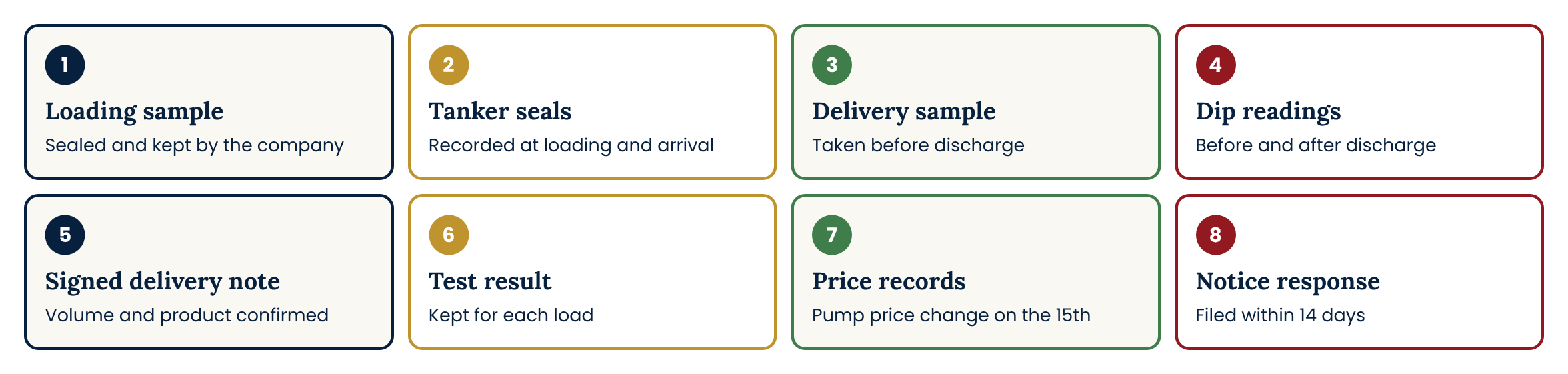
Figure 3. Evidence that protects each party
IX. Questions every participant should answer
Was the regulatory action lawful? The licensee should check whether the Authority gave notice, considered the response and decided within time, and whether its decision was reasonable and proportionate.40
Who caused the breach? The parties should trace the fuel from loading to sale using samples, dips, seals and delivery records.41
How does the contract allocate the loss? The answer lies in the indemnities, the implied conditions of quality, the clauses on charges during suspension and any force majeure clause.42
9.1 Practical guidance for dealers
Dealers should test each delivery before discharge where possible, retain sealed samples, record dips and seals, and refuse a load that fails. They should never sell above the maximum price to recover a loss, and should respond fully and on time to any notice to show cause.
9.2 Practical guidance for oil marketing companies
Companies should keep loading samples and seal records, choose and audit transporters carefully, and ensure their dealer agreements allocate the risk of adulteration in both directions. Where they hold the licence for a dealer operated site, they should inspect and test regularly, because the regulatory consequences will fall on them.
9.3 Practical guidance for regulators
The Authority would strengthen confidence in enforcement by publishing its procedure for closure and reopening, the time it takes to hear a licensee after an emergency closure, and the outcome of appeals.
X. Conclusion
Enforcement against adulteration, dumping, hoarding and overpricing protects motorists and the revenue, and the figures show that most stations comply. When a station fails, the regulatory consequences fall on the licence holder, but the commercial consequences must be traced to whoever caused the breach. Parties who can answer the 3 questions in this edition, and who keep the evidence that each question requires, will be able to share the loss fairly and to challenge an unfair decision effectively.
Benson Odiwuor is an Advocate of the High Court of Kenya based in Nairobi, whose practice focuses on dispute resolution in the regulated industries, including mining, oil and gas, banking and project finance. He is the editor of The BOLD, Benson Odiwuor’s Legal Digests, a legal newsletter on dispute strategies and legal developments in the regulated industries of Kenya. Subscribe to The BOLD here.
For inquiries, contact the author at info@bensonodiwuor.com.
References
- Petroleum Act 2019 (No 2 of 2019), now Cap 308 of the Laws of Kenya s 2 <https://new.kenyalaw.org/akn/ke/act/2019/2>. ↩
- Brian Oruta, ‘10 Fuel Stations Shut Down for Selling Adulterated Fuels’ The Star (Nairobi, 30 September 2025) <https://www.the-star.co.ke/news/2025-09-30-10-fuel-stations-shut-down-for-selling-adulterated-fuels>; ‘EPRA Closes 9 Filling Stations in Crackdown on Adulterated Fuel’ People Daily (Nairobi, 31 March 2025) <https://peopledaily.digital/news/epra-closes-9-filling-stations-in-crackdown-on-adulterated-fuel/amp>. ↩
- Petroleum Act s 92(1). ↩
- ‘Five Fuel Stations Flagged for Selling Diesel, Petrol Mixed with Kerosene’ Eastleigh Voice (Nairobi, April 2026) <https://eastleighvoice.co.ke/business/323483/five-fuel-stations-flagged-for-selling-diesel-petrol-mixed-with-kerosene>. ↩
- ‘EPRA Warns Oil Firms over Fuel Hoarding’ The Star (Nairobi, 8 April 2026) <https://www.the-star.co.ke/news/2026-04-08-epra-warns-oil-firms-over-fuel-hoarding>; ‘EPRA Issues Show Cause Notices to 14 Petrol Stations’ The Star (Nairobi, 12 April 2026) <https://www.the-star.co.ke/news/2026-04-12-epra-issues-show-cause-notices-to-14-petrol-stations>; ‘EPRA Issues Show Cause Notices to Petrol Stations over Alleged Fuel Price Hike’ The Standard (Nairobi, April 2026) <https://www.standardmedia.co.ke/national/article/2001545084/epra-issues-show-cause-notices-to-petrol-stations-over-alleged-fuel-price-hike>. ↩
- Kamau Muthoni, ‘Firm Linked to Embakasi Explosion Now Sues EPRA’ The Standard (Nairobi, 21 February 2024) <https://standardmedia.co.ke/testbed/business/amp/national/article/2001490305/firm-linked-to-embakasi-explosion-now-sues-epra>. ↩
- Petroleum Act s 92(1). ↩
- Petroleum Act s 92(2). ↩
- Petroleum (Products Quality Management) (No 2) Regulations 2025 (LN 185 of 2025). ↩
- Petroleum Act s 99(1)(k), (n), (p) and (q). ↩
- Petroleum Act s 99. ↩
- Petroleum Act s 81. ↩
- Petroleum (Retail Dispensing Site Construction and Licensing) (No 2) Regulations 2025 (LN 188 of 2025) regs 12(4) to (7) and 16 <https://epra.go.ke/extras/legal/web/uploads/6a5f3964c4b13_The%20Petroleum%20(Retail%20Dispensing%20Site%20Construction%20and%20Licensing)(No%202)%20Regulations.pdf>. ↩
- Retail Regulations 2025 reg 15(1)(c), (d), (f) and (g). ↩
- Petroleum Act s 85; Retail Regulations 2025 reg 23. ↩
- Energy Act 2019 (No 1 of 2019), now Cap 314 of the Laws of Kenya s 36(5). ↩
- Energy Act s 23(5); Odongo v Petroleum Institute of East Africa & another (Tribunal Case E007 of 2025) [2025] KEET 5 (KLR) (ruling of 15 May 2025) <https://new.kenyalaw.org/akn/ke/judgment/keet/2025/5/eng@2025-05-15>. ↩
- Constitution of Kenya 2010 art 47; Fair Administrative Action Act 2015 (No 4 of 2015) s 4. ↩
- Commission for Human Rights and Justice v Energy and Petroleum Regulatory Authority & another; Viji Filings Limited & 20 others (Interested Parties) (Petition E102 of 2024) [2024] KEHC 8624 (KLR) <https://new.kenyalaw.org/akn/ke/judgment/kehc/2024/8624/eng@2024-07-18>. ↩
- Oruta, ‘10 Fuel Stations Shut Down’ (n 2); ‘Five Fuel Stations Flagged’ (n 4). ↩
- ‘EPRA Closes 9 Filling Stations’ (n 2). ↩
- Oruta, ‘10 Fuel Stations Shut Down’ (n 2). ↩
- ‘EPRA Cracks Down on Adulterated Fuel, Names Offending Stations’ Kenyans.co.ke (December 2025) <https://www.kenyans.co.ke/news/119456-epra-cracks-down-adulterated-fuel-names-offending-stations>. ↩
- ‘EPRA Issues Show Cause Notices’ (n 5); ‘EPRA Issues Show Cause Notices to Petrol Stations’ (n 5). ↩
- ‘EPRA Warns Oil Firms over Fuel Hoarding’ (n 5); Brian Kimani, ‘EPRA Warns Oil Marketers of Ksh.10M Fines over Fuel Hoarding, Price Hikes’ Citizen Digital (Nairobi, 8 April 2026) <https://citizen.digital/article/epra-warns-oil-marketers-of-ksh10m-fines-over-fuel-hoarding-price-hikes-n380398>. ↩
- ‘Five Fuel Stations Flagged’ (n 4); Retail Regulations 2025 reg 16(3). ↩
- Petroleum Act s 99(1)(p) and (q). ↩
- Esso Kenya Ltd v Okiya (Civil Appeal 69 of 1991) [1992] KECA 53 (KLR) <https://new.kenyalaw.org/akn/ke/judgment/keca/1992/53/eng@1992-07-10>. ↩
- Retail Regulations 2025 reg 15(1); Energy and Petroleum Regulatory Authority, ‘Requirements for Licence for Retail of Petroleum Products (Except LPG)’ (February 2025) <https://epra.go.ke/sites/default/files/2025-02/Licence%20for%20Retail%20of%20Petroleum%20Products%20%28Except%20LPG%29.pdf>. ↩
- Sale of Goods Act (Cap 31) ss 15 and 16 <https://new.kenyalaw.org/akn/ke/act/1930/33/eng@1964-11-03>. ↩
- Petroleum Act s 99(1)(p) and (q). ↩
- Petroleum Act s 81(2). ↩
- Petroleum Act s 85. ↩
- Energy Act s 36(5). ↩
- Fair Administrative Action Act s 9; Geoffrey Muthinja Kabiru & 2 others v Samuel Munga Henry & 1756 others (Civil Appeal 74 and 82 of 2012) [2015] eKLR. ↩
- Muthoni, ‘Firm Linked to Embakasi Explosion’ (n 6). ↩
- Petroleum Act s 92(2); Retail Regulations 2025 reg 15(1). ↩
- Retail Regulations 2025 reg 16(3). ↩
- Commission for Human Rights and Justice (n 19); Muthoni, ‘Firm Linked to Embakasi Explosion’ (n 6). ↩
- Petroleum Act s 81; Fair Administrative Action Act s 4. ↩
- Petroleum Act s 99(1)(p) and (q). ↩
- Sale of Goods Act ss 15 and 16. ↩